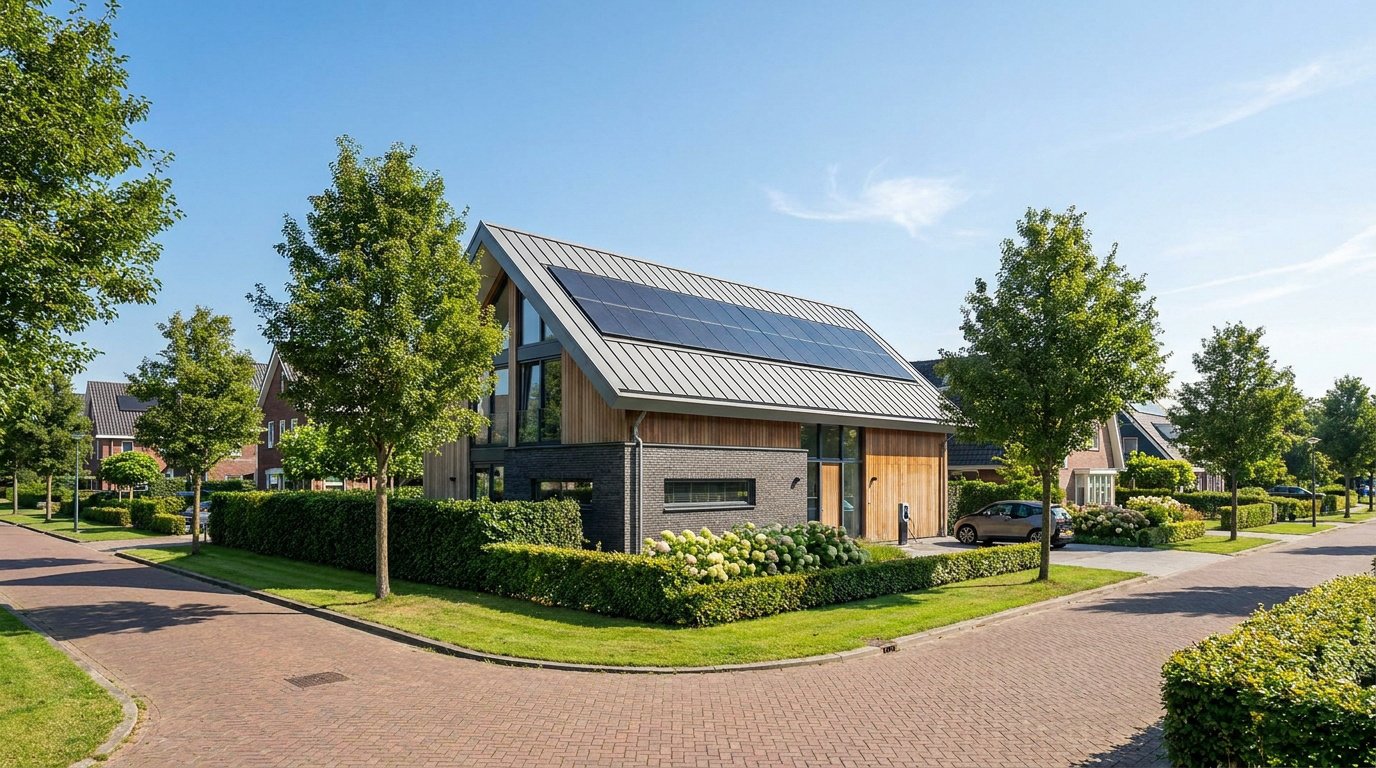
En Wallonie et en Flandre, la question n'est plus de savoir quelle prime demander, mais comment rentabiliser une installation photovoltaïque sans prime régionale. Ces deux régions n'accordent plus de prime pour les petites installations photovoltaïques des particuliers : en Wallonie, plus aucun soutien à la production pour ces installations depuis le 1er juillet 2018 et plus de prime compensant le tarif prosumer depuis 2024 ; en Flandre, la prime Fluvius ne vaut plus pour les installations mises en service à partir du 1er janvier 2024. Cette page fait le point, région par région ; les sites officiels de chaque région sont listés en fin d'article.
Si vous comptez encore sur les anciens mécanismes de compensation, votre calcul de rentabilité risque d'être faussé. Nous faisons le point, région par région, sur ce qui reste disponible en 2026 et sur la manière de rentabiliser votre installation grâce à l'autoconsommation.
Aides et primes panneaux solaires 2026 : le panorama au Benelux
La Wallonie et la Flandre n'accordent plus de prime pour les petites installations photovoltaïques des particuliers, tandis que Bruxelles maintient les certificats verts sur dix ans. Au Luxembourg, la prime Klimabonus reste accessible pour le photovoltaïque exploité en autoconsommation, sans cumul possible avec le tarif d'injection garanti.
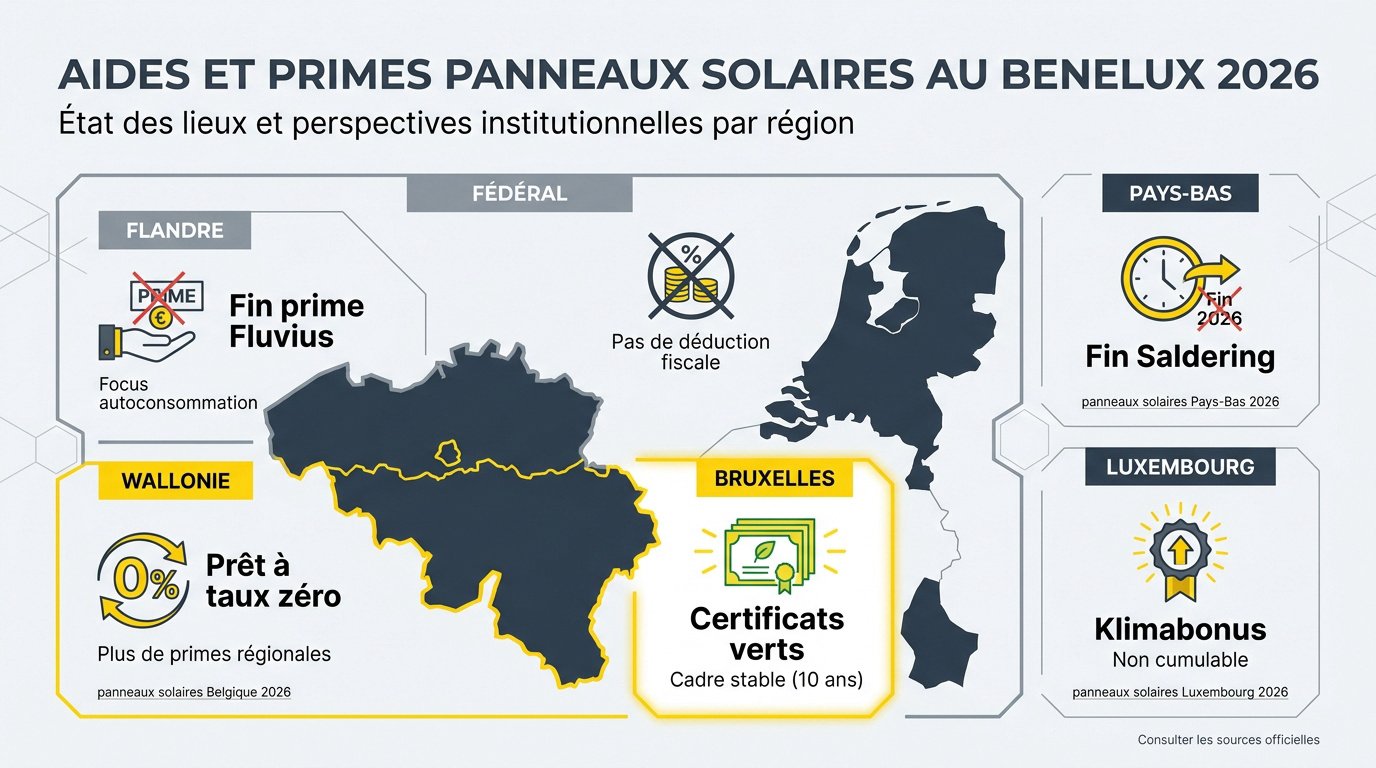
Concrètement, n'attendez plus de prime régionale pour une nouvelle installation en Wallonie ou en Flandre : la part de votre production que vous consommez vous-même pèse directement sur la rentabilité.
Situation en Wallonie et en Flandre
Depuis le 1er juillet 2018, la Wallonie n'accorde plus aucun soutien à la production pour une nouvelle installation photovoltaïque de 10 kW maximum (fin de la prime Qualiwatt). La prime régionale qui compensait le tarif prosumer a couvert les années 2020 à 2023 et n'est plus octroyée depuis 2024. La compensation entre l'électricité injectée et l'électricité prélevée reste acquise jusqu'au 31 décembre 2030, mais uniquement pour les installations de 10 kW maximum mises en service avant le 1er janvier 2024. Une installation de 10 kW maximum mise en service en 2026 en Wallonie n'a donc droit ni à une prime régionale ni à la compensation. Les primes Habitation wallonnes ne couvraient pas l'installation de panneaux photovoltaïques ; depuis le 1er octobre 2026, l'aide régionale à la rénovation passe par deux prêts, le Rénopack (prêt à taux zéro assorti, selon les revenus, d'une réduction du montant à rembourser) et le Rénoprêt. La communication officielle sur ce régime cite notamment la toiture, l'isolation, les châssis et le chauffage, sans mentionner les panneaux photovoltaïques.
Le Rénopack est réservé aux ménages des catégories de revenus C1 à C3. Le Rénoprêt, prêt à taux préférentiel ou, dans certains cas, à taux zéro, s'adresse notamment aux ménages de catégorie C4, aux propriétaires bailleurs et aux associations de copropriétaires. Les deux exigent en principe un audit logement préalable, réalisé ou actualisé au maximum un an avant la demande (pour les ménages de catégorie C1, le label PEB peut à défaut être estimé par l'organisme prêteur), et sont réservés aux logements de label PEB G ou F que les travaux portent au minimum au label D, ou de label E portés au minimum au label C (dérogations possibles pour des raisons techniques, fonctionnelles ou économiques dûment justifiées). Demandez à la SWCS ou au Fonds du Logement de Wallonie si des panneaux photovoltaïques peuvent être financés dans votre projet (voir aussi notre page Belgique).
En Flandre, la prime Fluvius est supprimée pour toute installation dont le contrôle AREI a eu lieu à partir du 1er janvier 2024. Une nouvelle installation ne reçoit plus ni prime ni certificats verts : l'électricité consommée au moment où les panneaux la produisent est la plus avantageuse, le surplus injecté étant rémunéré par le fournisseur à un tarif en baisse, parfois négatif.
- Prêts Rénopack et Rénoprêt en Wallonie, sans mention du photovoltaïque
- Fin de la prime Fluvius
- Focus sur l'autoconsommation
Mais alors, qu'en est-il de la capitale et des dispositifs nationaux ?
Dispositifs à Bruxelles et au niveau fédéral
À Bruxelles, les autorités maintiennent le mécanisme des certificats verts pour le photovoltaïque ; pour une installation de 5 kWc maximum, un installateur certifié RESCert est exigé depuis le 1er janvier 2026. Votre période d'éligibilité s'étend sur dix ans. Notez bien qu'aucune prime régionale complémentaire ne s'ajoute à ce dispositif.
Les certificats verts sont octroyés durant 10 ans. Ils reposent sur la production réelle d'énergie verte plutôt que sur un bonus de rénovation unique.
Au niveau fédéral, n'espérez aucune réduction d'impôt pour une installation photovoltaïque sur votre logement. Le levier fiscal à connaître est le taux de TVA de 6 % au lieu de 21 %, réservé aux logements dont la première occupation remonte à au moins dix ans et utilisés à plus de 50 % comme habitation privée ; un logement neuf ou plus récent reste au taux de 21 % (voir la FAQ et le site du SPF Finances).
Aucune réduction d'impôt pour les panneaux solaires des particuliers en 2026. Ne confondez pas usage privé et usage professionnel : une entreprise, un indépendant ou une profession libérale relève d'un autre régime fiscal, à examiner avec son comptable.
Le mécanisme des certificats verts bruxellois est maintenu, mais son taux d'octroi est revu régulièrement pour les nouvelles installations (baisse au 1er avril 2026 au-delà de 5 kWc). Une fois l'installation certifiée, le taux reste fixe pendant 10 ans. Vous devez consulter les sources officielles pour valider votre dossier administratif avant de signer quoi que ce soit.
Aux Pays-Bas, les règles changent au 1er janvier 2027 : la salderingsregeling prend fin à cette date.
Cadre législatif aux Pays-Bas et au Luxembourg
Jusqu'au 31 décembre 2026, la salderingsregeling néerlandaise permet encore de compenser chaque année l'électricité injectée et l'électricité consommée. Au 1er janvier 2027, ce régime de compensation annuelle s'arrête définitivement : l'électricité injectée sera alors rémunérée par votre fournisseur au lieu d'être compensée (détails pour votre installation aux Pays-Bas sur notre page Pays-Bas).
Au Luxembourg, la prime à l'investissement passe par le programme Klimabonus, mis en place après le programme PRIMe House 2017, qui reste en vigueur pour certains dossiers plus anciens ; le tarif d'injection garanti existe toujours en parallèle. Les conditions du Klimabonus sont publiées sur Guichet.lu ; voir aussi notre page Luxembourg.
Attention : dans le régime Klimabonus 2026, la prime photovoltaïque n'est pas cumulable avec le tarif d'injection garanti ; il faut y renoncer pour la toucher. Le surplus peut toujours être injecté et revendu au prix du marché. Ce choix vous engage pour toute la durée de vie de l'installation : mieux vaut le trancher avant de signer le devis.
Rentabilité du photovoltaïque : l'ère de l'autoconsommation
Mais au-delà des aides, c'est votre manière de consommer qui dicte désormais la rentabilité réelle de votre installation.
Maximiser la consommation directe pour réduire les frais
Synchronisez vos besoins avec votre production. Lancez vos appareils quand le soleil brille. L'autoconsommation instantanée est la clé.
Lorsque votre installation ne bénéficie pas de la compensation annuelle, déplacer une partie de votre consommation vers les heures où vos panneaux produisent augmente votre autoconsommation et fait baisser votre facture d'électricité.
Sans compensation, le surplus injecté est en général racheté à un prix inférieur à celui de l'électricité achetée au réseau : consommer sa production au moment où elle est produite est donc en général plus avantageux que la revendre. Bref, consommez votre propre électricité. Aux Pays-Bas, la compensation (salderingsregeling) s'applique encore jusqu'au 31 décembre 2026.
Impact des compteurs intelligents sur vos économies
| Région | Type de compteur | Modèle de compensation | Impact facture |
|---|---|---|---|
| Wallonie | Communicant | Plus de compensation pour les installations mises en service depuis le 1er janvier 2024 ; maintenue jusqu'au 31 décembre 2030 pour les installations de 10 kW maximum mises en service avant cette date | Prélèvement et injection mesurés séparément |
| Flandre | Numérique | Coûts de réseau facturés sur le prélèvement ; injection rémunérée par le fournisseur | Plus de compteur qui tourne à l'envers avec le compteur numérique (depuis 2021) |
| Bruxelles | Intelligent | Compensation supprimée depuis 2021 | Prélèvement facturé au coût total ; surplus que vous pouvez vendre à un fournisseur (ou à un agrégateur), au prix de la seule composante énergie |
| Pays-Bas | Compteur intelligent | Salderingsregeling jusqu'au 31 décembre 2026 | À partir du 1er janvier 2027, indemnité du fournisseur pour chaque kWh injecté (au moins 50 % du tarif de fourniture hors taxes jusqu'au 31 décembre 2029) |
La compensation annuelle (le compteur qui tourne à l'envers) disparaît. À Bruxelles, elle est supprimée depuis novembre 2021. En Flandre, elle prend fin avec le compteur numérique, que Fluvius doit installer depuis 2025 chez les propriétaires de panneaux. En Wallonie, elle ne vaut plus que pour les installations de 10 kW maximum certifiées avant le 1er janvier 2024, et au plus tard jusqu'au 31 décembre 2030. Aux Pays-Bas, la salderingsregeling prend fin le 1er janvier 2027. Le compteur communicant (ou numérique) mesure séparément l'électricité prélevée et injectée, avec un enregistrement par quart d'heure (l'accès à cet historique détaillé passe par le gestionnaire de réseau et peut nécessiter votre accord, comme aux Pays-Bas).
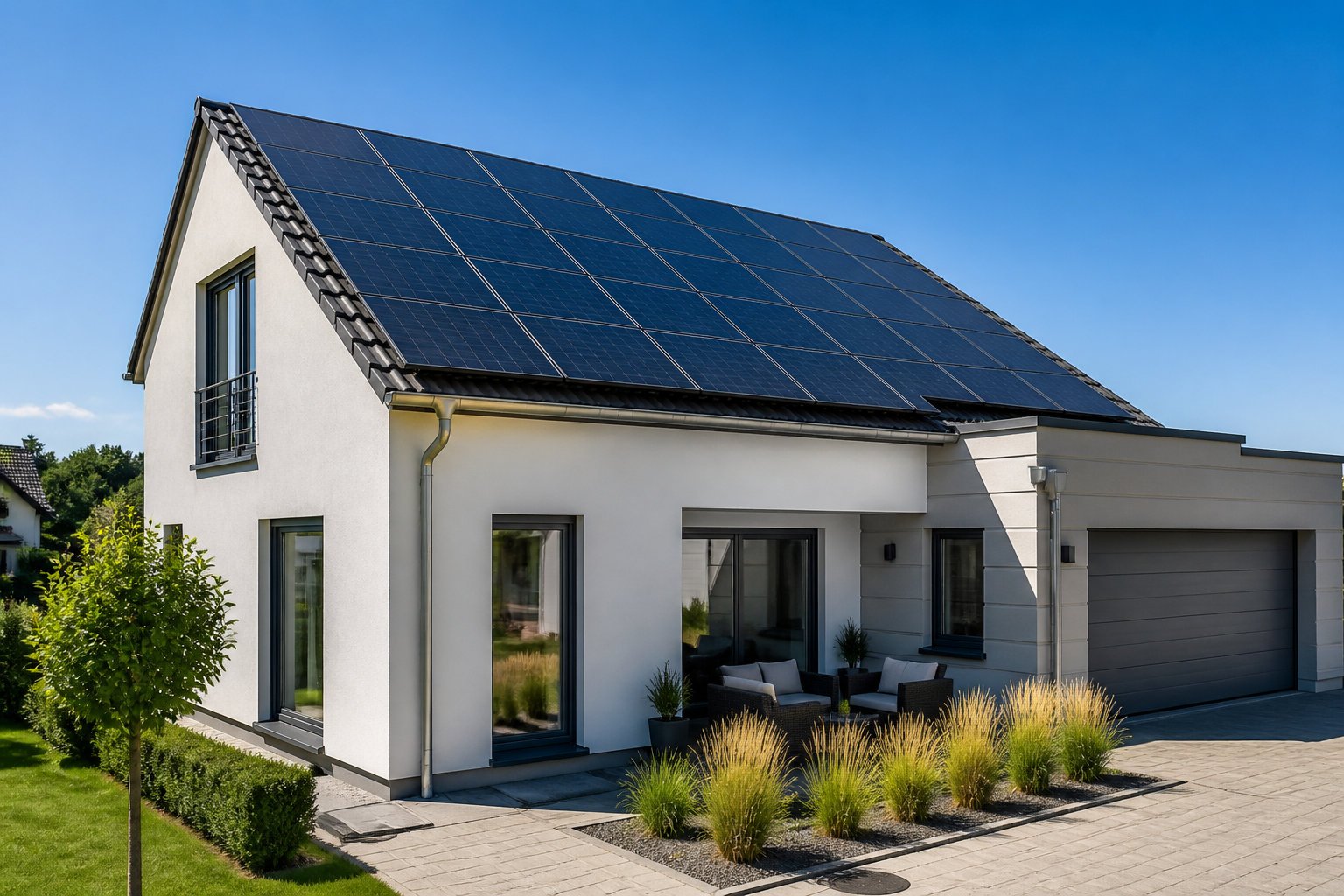
Sans compensation, chaque kilowattheure prélevé sur le réseau est facturé au prix complet (énergie, coûts de réseau et taxes). Consommer directement votre production réduit donc la facture.
Leviers techniques pour accroître votre retour sur investissement
Pour pallier la fin de la compensation, plusieurs solutions techniques permettent de reprendre la main.
Rôle des batteries domestiques dans la gestion de l'injection
Évaluez l'intérêt du stockage physique. La batterie stocke une partie du surplus produit en journée au lieu de l'injecter sur le réseau, pour l'utiliser plus tard. Elle augmente la part de votre production consommée sur place.
Stockez le surplus produit à midi. Utilisez ensuite cette réserve durant la soirée pour vos besoins domestiques.
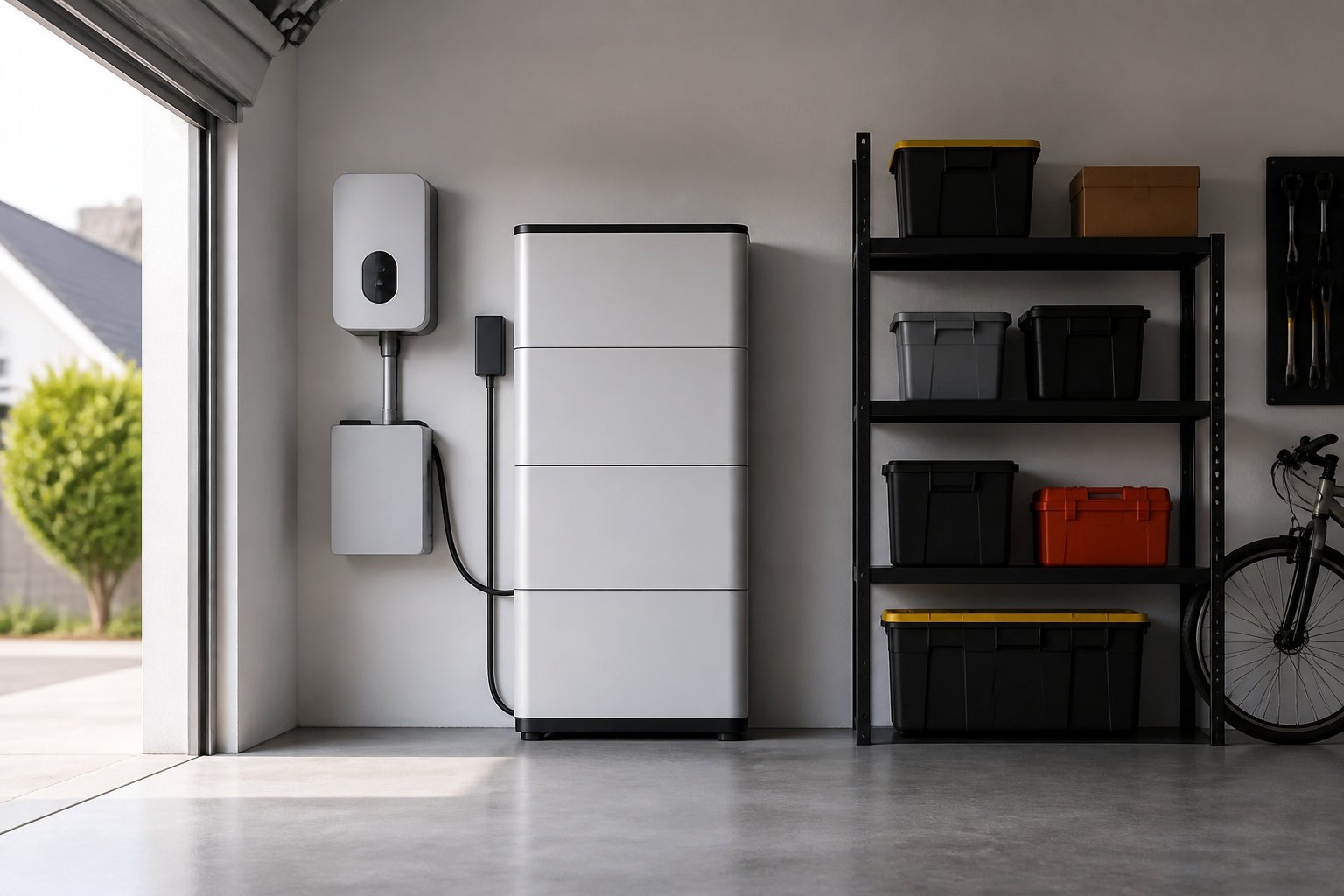
Surveillez les critères de performance actuels. La capacité et le nombre de cycles comptent énormément. En revanche, le coût global reste un facteur à surveiller de près.
Gestion des appareils énergivores via les systèmes EMS
Un système de gestion de l'énergie (EMS) pilote vos appareils selon la production réelle de vos panneaux. Il peut par exemple démarrer en priorité la pompe à chaleur ou le chauffe-eau pendant les heures de forte production.
Programmez vos appareils lourds, comme le lave-linge ou le lave-vaisselle, de préférence entre 11 h et 15 h : c'est en général à ces heures que les panneaux produisent le plus.
En décalant ainsi vos appareils, vous consommez davantage votre propre production et prélevez moins d'électricité sur le réseau. Selon le gouvernement flamand, l'autoconsommation d'un ménage moyen peut ainsi passer d'environ 28 % à 35 %.
Partage d'énergie et revente : valoriser chaque kilowattheure
Si votre production dépasse vos capacités de stockage, de nouvelles opportunités de partage collectif émergent.
Personne morale (association, coopérative, etc.) qui permet à ses membres, notamment des citoyens, des PME ou des autorités locales, de partager l'électricité produite localement, en passant par le réseau public de distribution. En Belgique, chaque participant doit disposer d'un compteur communicant (en Wallonie et en Flandre, un compteur télérelevé par quart d'heure est aussi admis). Les frais de réseau restent dus sur l'électricité partagée en Wallonie et en Flandre. À Bruxelles, pour la période 2025-2029, les tarifs de réseau sont réduits sur l'électricité partagée, et la réduction est plus forte quand les participants se trouvent dans le même bâtiment ou sont alimentés par la même cabine basse tension.
Mécanismes de partage d'énergie entre voisins
En Belgique, les règles dépendent de la région. En Flandre et à Bruxelles, vous pouvez vendre ou donner votre surplus à un autre client, pas forcément votre voisin, au prix convenu entre vous. En Flandre, la vente se fait à une seule autre partie, établie elle aussi en Flandre, avec un compteur numérique communicant (ou un compteur AMR) relevé au quart d'heure, et après inscription du projet auprès de Fluvius, le gestionnaire de réseau ; à Bruxelles, l'échange de pair à pair passe par une convention conclue entre les parties avant le partage et par une déclaration à Sibelga. En Wallonie, le partage n'est possible, à ce jour, qu'au sein d'un même bâtiment ou via une communauté d'énergie, et chaque participant doit disposer d'un compteur communicant ou d'un compteur télérelevé au quart d'heure. Sources : Fluvius, BRUGEL, SPW Énergie.
Le partage est aussi possible au sein d'un même bâtiment, en Wallonie, à Bruxelles et en Flandre : une copropriété peut répartir entre les occupants l'électricité produite par des panneaux posés sur la toiture commune, après notification au gestionnaire de réseau.
En Wallonie et à Bruxelles, les règles de partage et de facturation de l'électricité partagée sont fixées dans une convention de partage, conclue entre les participants ou, dans une communauté d'énergie, entre les participants et la communauté. En Flandre, le vendeur fixe lui-même son prix en cas de vente de pair à pair, mais une communauté d'énergie ne peut pas facturer de prix au kWh à ses membres pour l'électricité de ses installations communes : seuls des frais administratifs sont admis. En Flandre, les frais de réseau et les taxes restent dus sur l'électricité partagée. En Wallonie aussi, avec une exception : pour un partage au sein d'un même bâtiment, les tarifs de distribution et de transport facturés au kWh sont réduits de 80 % (méthodologie tarifaire de la CWaPE pour 2025-2029) ; le reste des frais de réseau et les taxes restent dus. À Bruxelles, pour la période 2025-2029, les tarifs de réseau sont réduits sur l'électricité partagée, et la réduction est plus forte quand les participants se trouvent dans le même bâtiment ou sont alimentés par la même cabine basse tension. Renseignez-vous auprès du régulateur de votre région (CWaPE en Wallonie, Vlaamse Nutsregulator en Flandre, BRUGEL à Bruxelles) avant de vous engager.
Stratégies de revente et tarifs d'injection des fournisseurs
Analysez la revente du surplus non consommé. En Flandre, chaque fournisseur fixe librement le prix auquel il rachète l'électricité injectée, à prix fixe ou variable, et la V-test du régulateur flamand compare aussi ces contrats de rachat. Comparez l'offre complète, contrat de rachat et contrat de fourniture, en fonction de votre profil de consommation. Soyez vigilants sur les clauses.
Sans prime en Wallonie ni en Flandre pour les petites installations des particuliers, la rentabilité d'une nouvelle installation dépend notamment de votre taux d'autoconsommation, du prix de l'installation et de l'exposition de votre toit. Pour une adresse située dans l'une des communes wallonnes couvertes par notre simulateur, celui-ci estime la production de votre toit à partir de la Cartographie solaire du SPW.
Où trouver les montants à jour
Vous ne trouverez volontairement aucun montant de prime dans cet article. Les pourcentages cités pour la TVA, les tarifs de réseau ou la rémunération de l'électricité injectée sont des taux fixés par la réglementation, pas des montants d'aide. Les aides évoluent et diffèrent selon la région : un montant publié ici risquerait vite d'être périmé. Les montants en vigueur sont publiés par les autorités de chaque région : consultez les sites officiels listés en fin d'article. Notre méthode est détaillée sur la page Sources et méthodologie.